Kirana Stores Don't Need Saving. They Need Demand.
Why Bharat's retail DNA needs a way to know what households plan to buy before the store buys its stock.
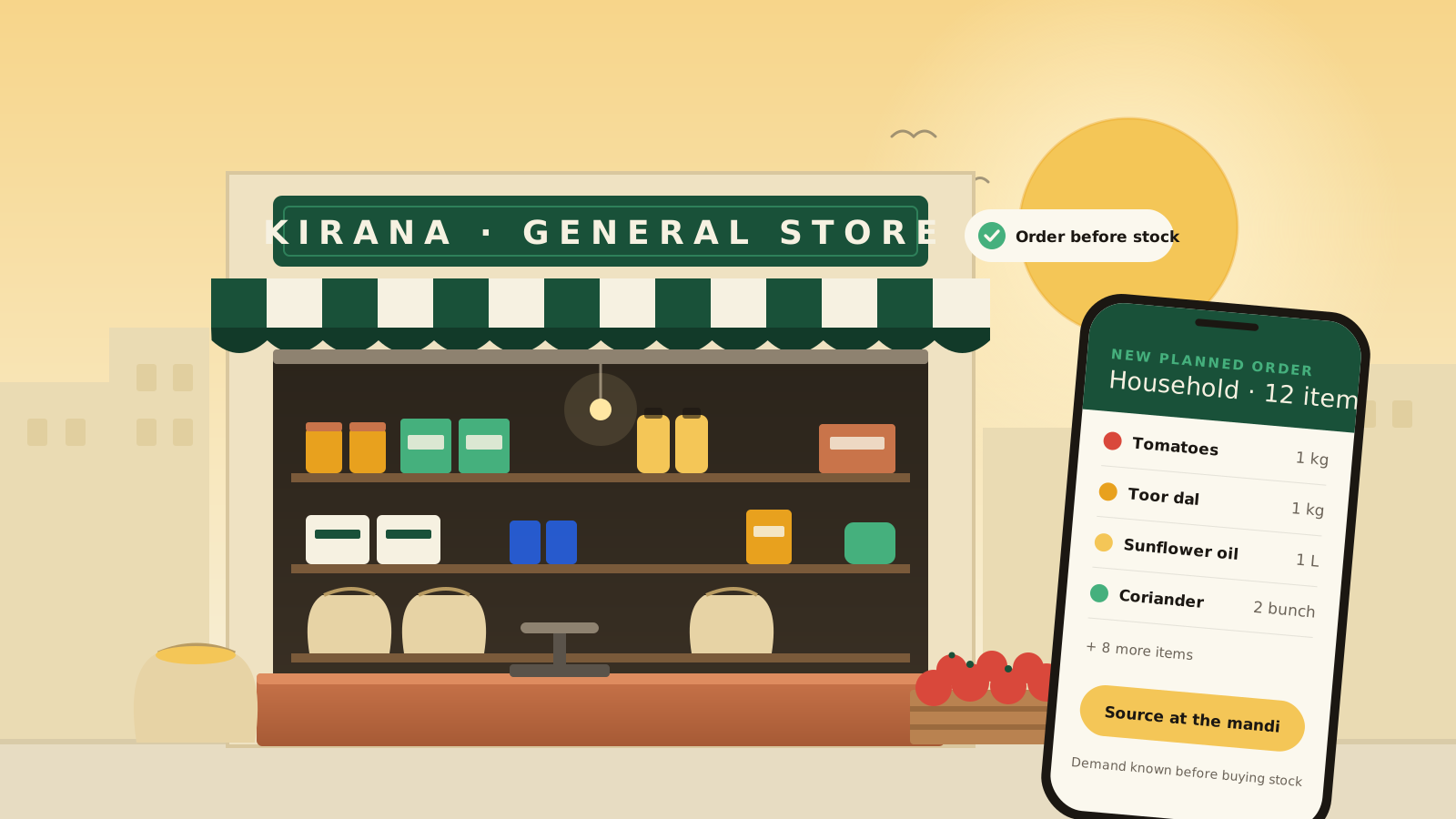
Before sunrise, a kirana owner stands in front of a half-empty shelf and makes the decision that shapes the week: how much to buy. Tomatoes or not? Another carton of the oil that moved well last month? There is no dashboard. There is memory, instinct and a long relationship with the people on the street. Buy too little and a customer walks out. Buy too much and the money sits on the shelf until it spoils or the price comes down.
Every purchase puts cash on the line before anyone has said what they will buy. The shopkeeper has something valuable: years of experience, a close relationship with the neighbourhood and a feel for local buying habits. What is missing is a reliable, affordable way to turn that knowledge into advance notice of what households will buy. That is the problem digital tools for kiranas should solve.
The kirana is not a legacy format. It is the system.
Roughly 12 million retail outlets, most of them small shops, serve India, according to McKinsey’s 2022 report on Indian grocery retail. A 2022 CB Insights analysis puts the kirana share of India’s FMCG sales, the packaged everyday goods on a grocery shelf, at just over 90%, a share it says grew during the pandemic.
They last because of what no warehouse can copy: proximity, trust, credit on a handshake, the freedom to break a pack, and a shopkeeper who knows which family has stopped eating onions for the festival. Those are not features an app adds later.
But the same shops carry a quiet weakness. The kirana’s strengths are about people. Its weakness is information: it rarely knows what its neighbours will buy until they walk in, so it buys stock on instinct and carries the risk.
The threat is not technology. It is the gap in tools.
Competitors are investing heavily. In 2024, more than two-thirds of India’s online grocery orders went through quick-commerce platforms, according to Bain & Company’s How India Shops Online 2025, written with Flipkart. That shows how much money is chasing the category. It does not show which model works best for neighbourhood shops.
Those platforms can pay for forecasting systems and for stock held close to the customer. A kirana owner has neither, and nobody should expect the owner to buy them.
Calling kiranas backward is the wrong diagnosis. They are under-tooled.
What digital tools usually do, and where they fall short
Each tool solves a real problem. But recording a sale, taking a payment, reaching more customers and restocking more easily are not the same as knowing what a household plans to buy before the store spends its money. The missing piece is a link between what households plan and what the shop buys.
The missing piece: knowing before buying
Fast delivery works by guessing: stock placed close to the customer, bought before any order, in the hope that the guess was right. A better guess is still a guess. A planned order tells the store what households need before it buys the stock.
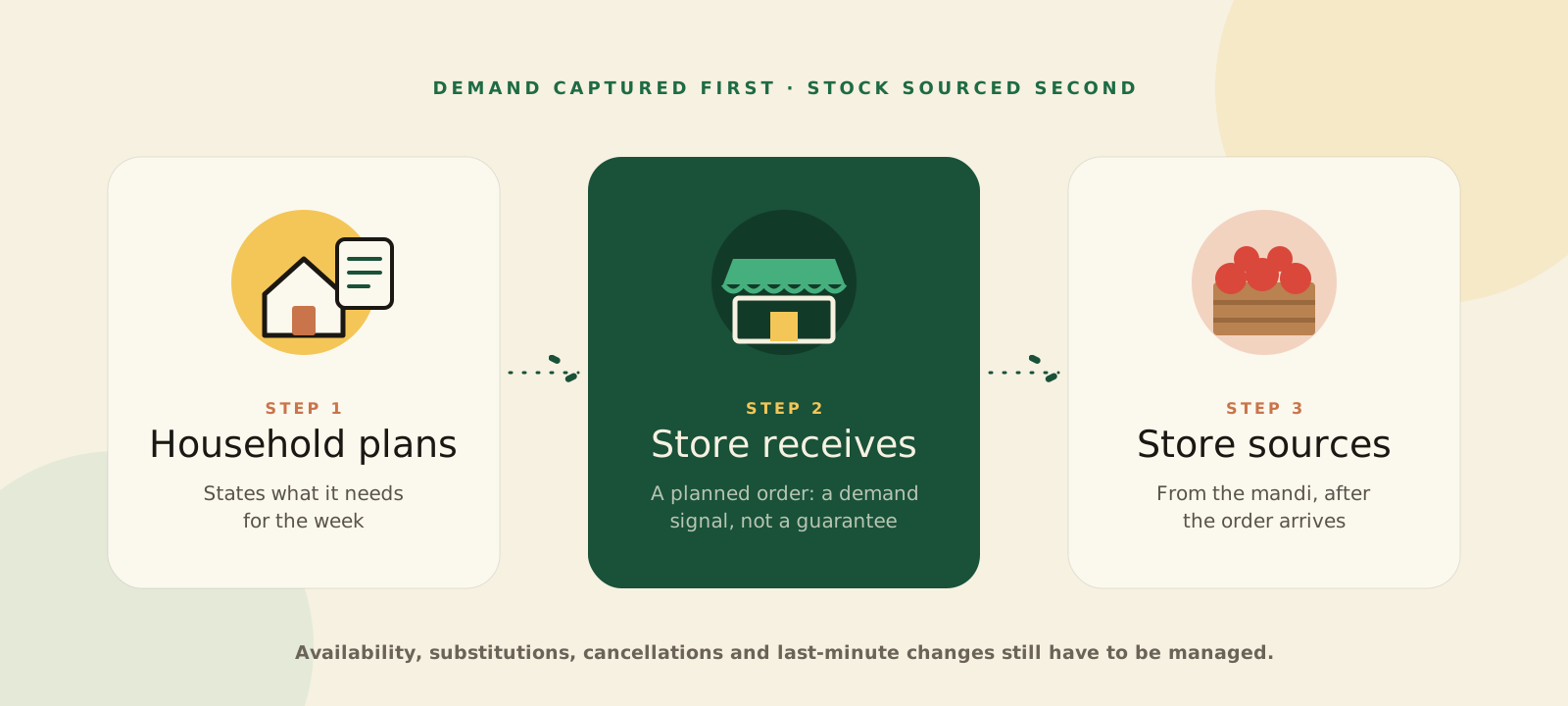
The shop learns what households want before it buys, instead of trying to guess better. What we hope follows, and what our pilot has to test, is that the store buys less on a guess and puts its cash to better use. A planned order is a heads-up, not a guarantee. Items can be unavailable, orders can be cancelled and plans can change, and the store still has to handle that.
We call this demand-led neighbourhood commerce: neighbourhood shops that start from what households ask for.
What good tools should do
These are the tests we set for ourselves, not claims of what is already proven.
- They should run on the phone the owner already has.
- They should work in the owner's language and in tools already in daily use, such as WhatsApp.
- They should leave the owner in charge of the shop, the customer relationship and the prices.
- They should bring orders, not only tools.
- They should not ask the owner to pay for software before it has brought an order.
Digitisation should strengthen the kirana, not replace it
India’s neighbourhood kiranas do not need to become miniature versions of large retail chains. They need practical ways to turn the trust they have built with customers into better-informed buying decisions.
At ShopConnect, we are testing whether knowing what households plan to buy, before the store buys, can help neighbourhood shops serve customers more reliably, hold less unsold stock and build stronger businesses. The idea is simple. Whether the economics work in practice is what the pilot must show.
The next chapter of kirana digitisation should be judged not by how many stores adopt another tool, but by whether those tools make the business measurably better for the people who run it.
Receive planned orders from households near your shop in Indiranagar or a nearby neighbourhood, and see what they need before you buy.
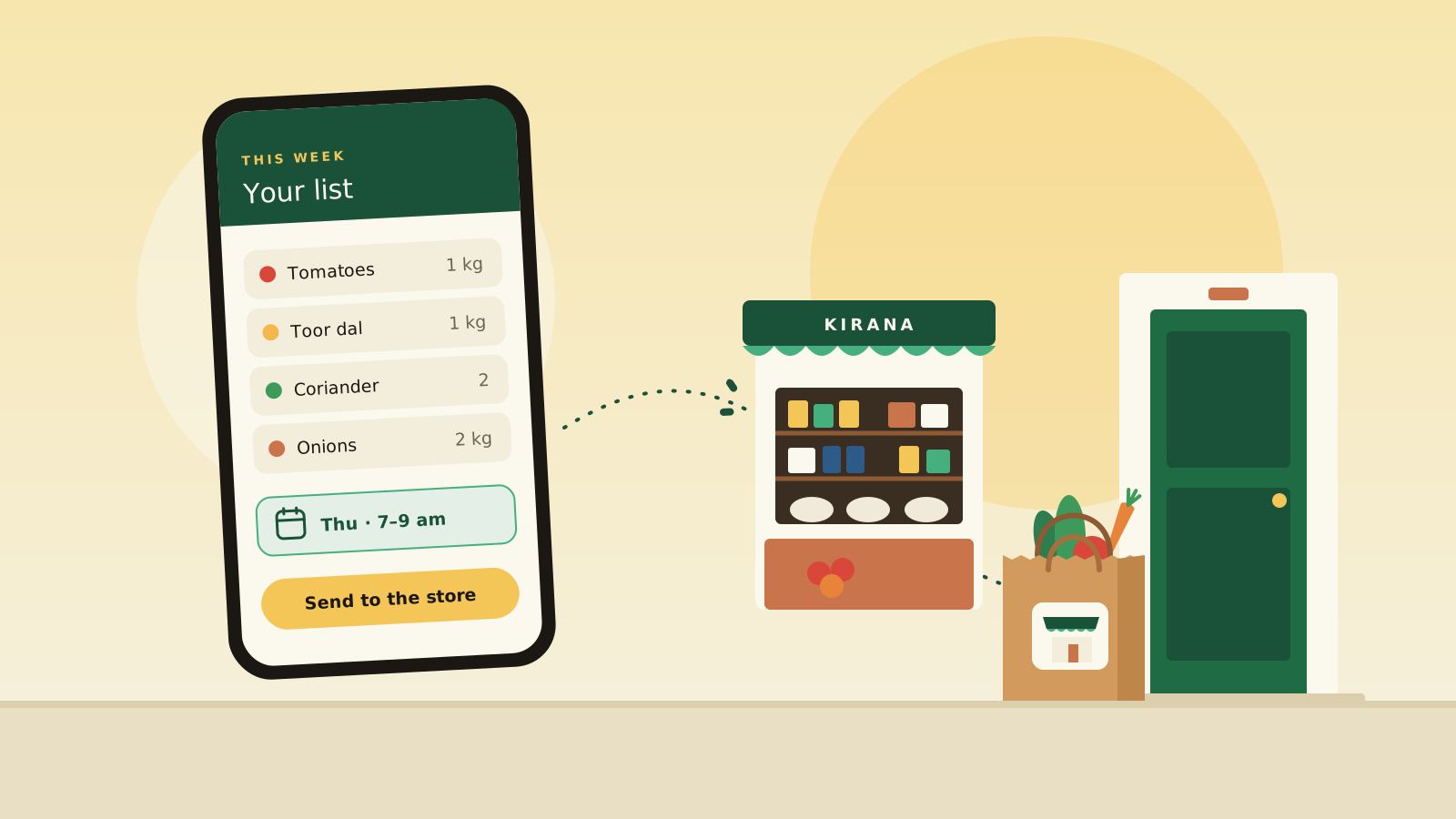
Message us on WhatsApp How it works for storesPlan what your household needs and send the list to a kirana nearby, so the store can buy to your order.
Plan for my householdWork in distribution or FMCG? We would value your view too: write to info@nvipani.com.
Write to the team building ShopConnect.
Store owners, households, distributors and brands: we read every message.